Definition of an Inbound Marketing Funnel

Creating a conversion funnel is one of the first steps in an inbound strategy. Before you begin, you’ll need to identify your buyer personas to tailor each funnel to their needs.
This article is aimed at all those who are in the early stages of developing an inbound strategy.
If that’s you, this is the article for you!
Definition of the inbound marketing funnel
Sometimes also called a conversion funnel, the inbound marketing funnel refers to the process a lead follows from the moment they become aware of you until they make the decision to hire your services or buy your products.
If you’re familiar with the sales funnel, you’ll see that the marketing funnel is similar. In this case, the funnel is divided based on the type of interest users have in our content and services, with the goal of providing them with the information they need at the right time.
“The main objective of the inbound marketing funnel is to be able to offer the right content, at the right time, to the right person.”.
And how does it differ from the flywheel?
Just as the way people buy changes, the way we conceive of the marketing funnel model changes.
The ultimate goal for every business is acquiring new customers. You’ve invested significant time and resources in acquiring them, and each month, you start prospecting all over again. But what about existing customers? A loyal customer can help you grow your business. This model, the flywheel, puts the customer at the center: first, you attract the customer with relevant content so you can nurture the relationship and build loyalty. Finally, you strive to enhance their experience during the delight phase.
Are they different? To some extent, yes, they are. While the funnel is more focused on achieving linear behavior and medium/long-term actions, the flywheel aims for a very long-lasting relationship between customer and company, with the goal of having the customers themselves accelerate the growth of your business.
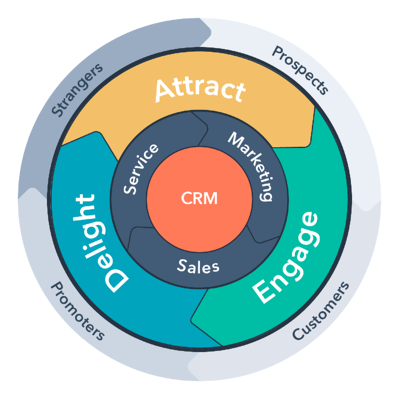
Source: hubspot.es
¿Qué modelo se adapta mejor a mi negocio?
Which model best suits my business?
What are the stages of the conversion funnel?
If you are still at an earlier stage, then let’s talk about the stages of a traditional conversion funnel:
- Awareness or TOFU (discovery). This is the phase where you want to attract as many users as possible. To do this, your goal is to become visible on the channels you use: social media, blog, paid campaigns, etc.
- Consideration or MOFU (Evaluation). Valuable content is generated for users, and to obtain it, an exchange of information through forms will be necessary. In this way, you can qualify leads.
- Decision or BOFU (bottom of the funnel). In the final stage, qualified leads become sales opportunities. Sales techniques such as discount codes or free audits are used.
Within each stage, the content offered will depend on the buyer’s journey.
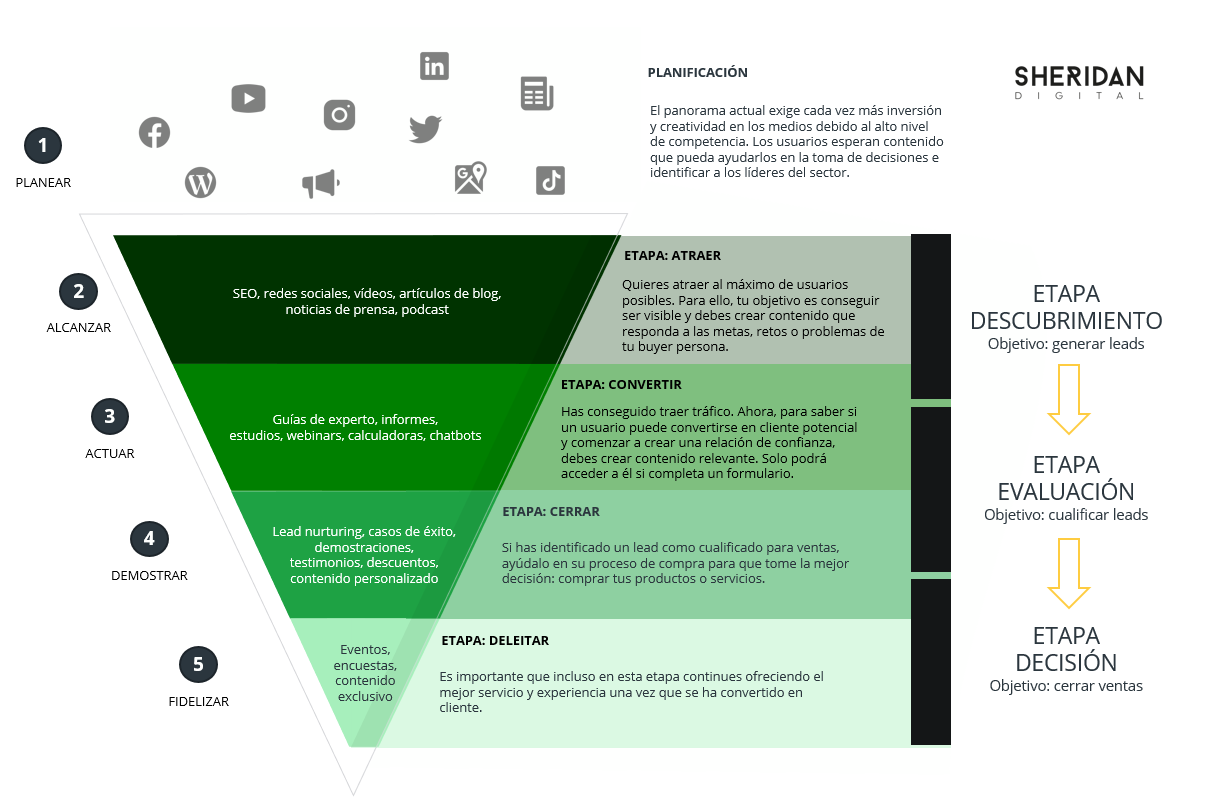
Ejemplos de funnel de marketing
You’ve probably already published some interesting content on your website and perhaps even worked with conversion funnels, even if they were short. Here are some examples of marketing funnels:
- LinkedIn post > Blog article > CTA > Landing page > Extended report
- YouTube video > Blog article > CTA > Call to sales
- Press release > Landing page > Resource download
“Tip: Use the Pareto 80/20 Law in your content marketing strategies: 20% to create the content and the remaining 80% to distribute and promote the content.”
The examples may seem straightforward, but user behavior is not. Today, we access content through multiple devices and platforms. Therefore, it’s crucial to ensure your content is visible across all channels where your buyer personas are present, in order to optimize resources and efforts.
Request your free consultation with our experts.
Frequently asked questions