How to create an inbound marketing campaign

Succeeding in an inbound marketing campaign requires more effort and creativity than ever before. For this reason, we must execute them in the most organized and planned way possible.
Let’s also remember that the goal of each of these campaigns is not to chase our audience but to attract leads organically.
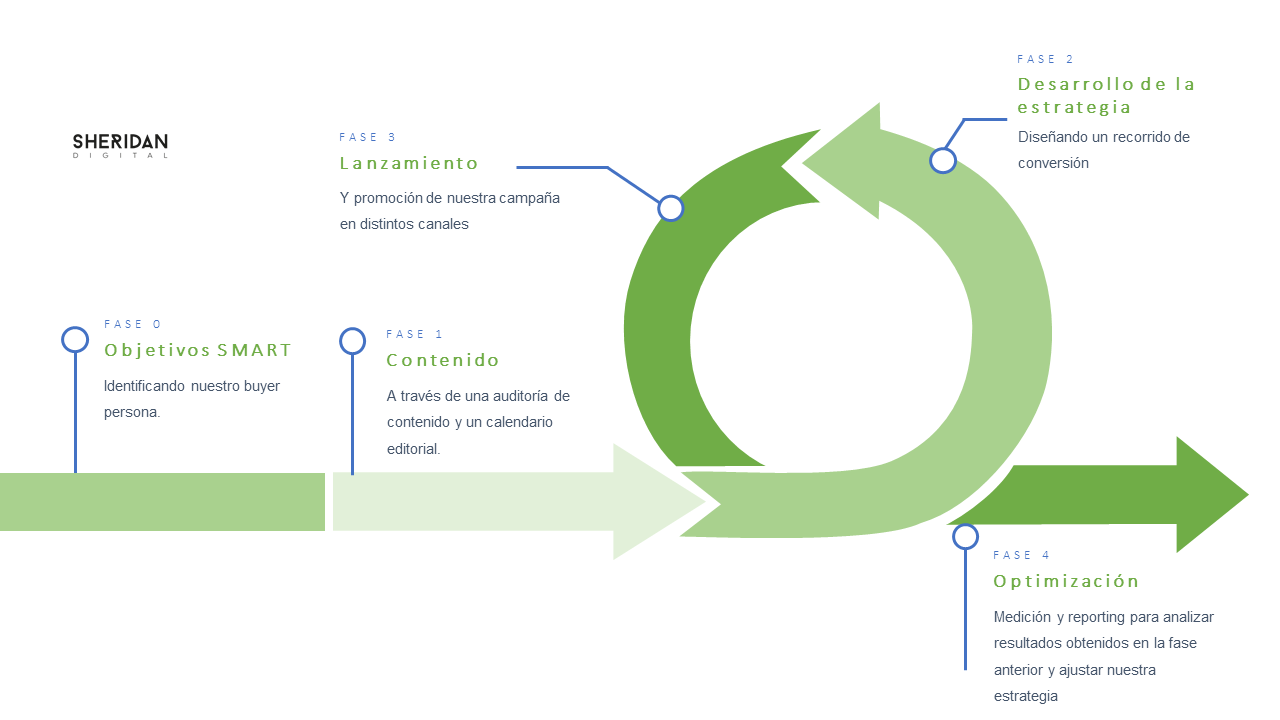
Throughout this article we will talk about how to launch an inbound marketing campaign in 5 steps:
- Set SMART goals according to the buyer persona
- Content audit and strategies
- Design conversion journey
- Launching and promotion
- Reporting and results optimization
Set SMART goals
Although you’ve probably read it in many articles, it’s worth reiterating: without a clear goal to achieve, it’s impossible to track and measure our success rate. Goals help us understand where we are and where we want to go.
All campaigns should have a SMART objective, meaning they should set criteria that serve as a guide to determine your company’s growth. For example, in the construction sector:
| Goal | We want architects to be better trained |
|---|---|
| S – Specific | We want architects to download more technical or specific documentation that will help them solve problems or achieve the goals of their projects. |
| M – Measurable | To determine if more students are being recruited, we will create downloadable resources. The KPI to monitor will be the conversion rate. |
| A – Achievable | The average conversion rate was 0.79% monthly in 2021. Given the historical data, we propose a 25% annual increase over last year to reach an average conversion rate of 1%. |
| R – Relevant | If architects are better trained, they will understand that they can rely on our solutions for their sustainable architecture projects. This translates into more conversion opportunities. |
| T – Time-defined | We want to achieve a conversion rate close to 1% within 12 months |
These objectives should help the marketing and sales teams align, so both parties should be aware of these goals.
Buyer persona
Every inbound campaign, in addition to being defined with SMART objectives, must be directed at someone, a target audience. Or even better: a buyer persona.
Don’t tell me your buyer persona is “women between 18 and 60 years old,” because that won’t work and your campaigns will fail.
A buyer persona is a semi-fictional representation of your ideal customer. It’s composed of specific sociodemographic data and information about their online, personal, and professional behavior related to the company they work for. Furthermore, it’s shaped by the needs, concerns, or challenges they face within their employers.
Don’t know how to create a buyer persona?
We recommend using HubSpot’s free buyer persona generator
- Create a list of all the content you have available, both marketing and sales-related, and determine the usefulness of each piece of content for each of your buyer personas.
- Group them by categories or themes. Ideally, each category should address a specific concern or problem. Furthermore, you could further segment these categories by the solutions or products you offer.
- Each piece of content, already grouped by categories, will correspond to a phase of your purchase journey (or buyer journey, for those of us who like the English terms): research, consideration, and decision.
- Once you’ve organized your content, you’ll determine which pieces will become premium content—content you’ll offer in exchange for information. You can also consider how to repurpose each piece of content: articles can be turned into infographics, webinars into short videos for social media, and so on.
Design conversion journey
We’ve reached the next step: once the premium content has been determined, we will create a journey that takes the user through the conversion funnel.
A conversion journey is simply the natural process a user follows until they become a lead after completing a download (or other desired action) on your website. It consists of the following elements:
- CTA, Call-to-action.
- Landing page
- Thank you page
- Follow-up email
CTA
Aligned with the landing page copy, it should be clear and concise. The user should know in two sentences what they are going to download.
Landing page
The goal is to get the user to take the desired action: completing the form to receive valuable information. For this reason, you should avoid all distractions: remove the menu and footer, leaving the form and the description of the premium content as the main focus.
Thank you page
The user will feel more at ease knowing they’ve successfully submitted the form and received the requested information. Furthermore, you can guide them to the next step: reading other articles or downloading related content.
Follow-up email
Through marketing automation tools (such as HubSpot or ActiveCampaign), the person will receive the requested document in their inbox. This way, they can access it whenever they want.
Launch and promotion of inbound marketing campaigns
Now that everything is in place, it’s time to launch our inbound marketing campaign. You have several channels at your disposal to distribute the content. Here are some ideas:
Web
- Embed the CTAs you’ve created. Place them within the related articles.
- Create a pop-up form on specific pages, segmenting by categories or user behavior. Prevent your website from becoming a circus.
Social networks
Schedule several different posts throughout the month and experiment with different copy and visual elements.
Email Marketing
From a newsletter to a strategy of automated sequences or workflows.
Paid Media
Paid or programmatic advertising campaigns
Reporting and optimization
Having the right measurement tools is key if we want to know:
- If we have achieved the objectives mentioned at the beginning of this article.
- Cuál ha sido el impacto de nuestras acciones de marketing en los distintos canales.
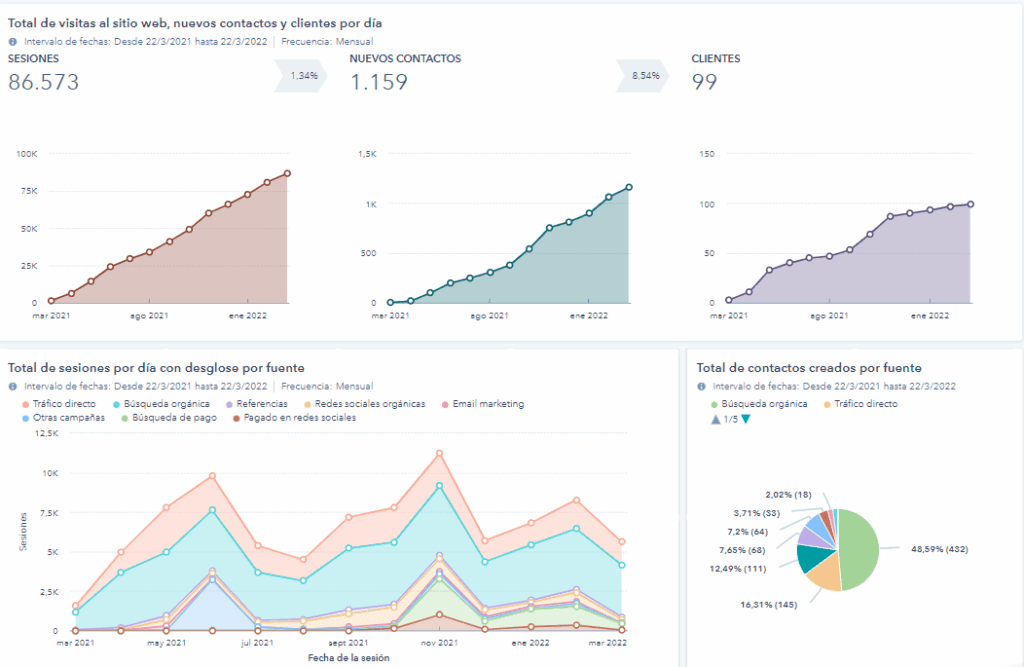
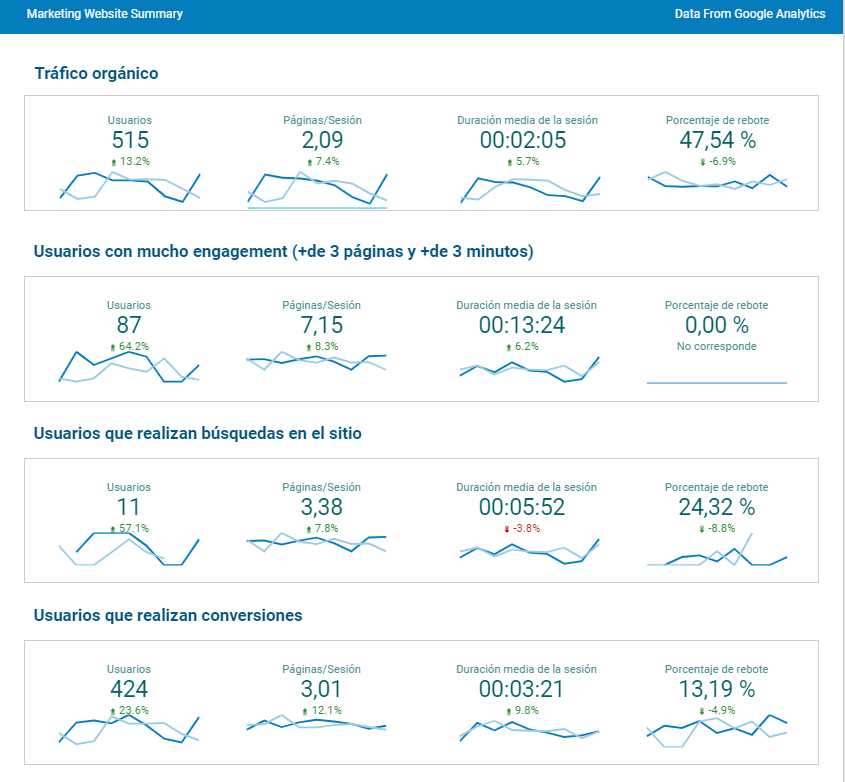
For example, HubSpot or Data Studio allow you to create custom dashboards to visualize the information you need.
Do you still have questions? Don’t hesitate to contact us to discuss what you should do in your specific situation.
Request your free consultation with our experts.
Frequently asked questions