B2B customer journey: definition, mapping and touchpoints

The B2B customer journey refers to the series of steps a potential customer takes from becoming aware of your brand to becoming a customer, and hopefully a repeat customer. In the B2B sector, this journey is more complex and longer than in B2C marketing, as it involves multiple decision-makers, a longer sales cycle, and a more technical approach.
Optimizing the B2B customer journey is essential for improving customer experience, increasing conversions, and maximizing retention. This article details how to understand and improve each phase of the customer journey, from awareness to purchase decision and beyond.
What is the B2B Customer Journey?
The B2B customer journey describes the process a company follows from the moment it discovers a solution until it decides to purchase a product or service. Unlike B2C, where decisions are usually quick and made by a single consumer, in B2B purchasing decisions are slower, as they involve different people within the organization, each with their own perspective and criteria.
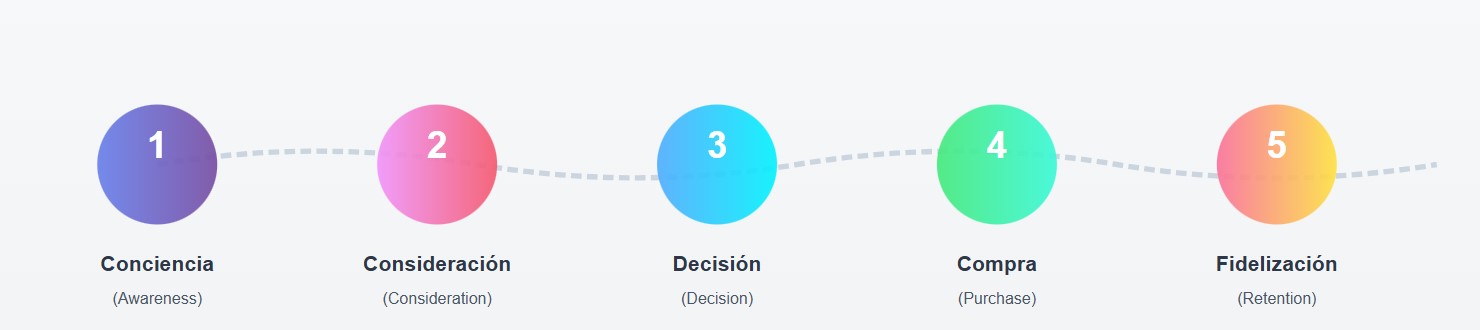
This journey can be divided into several stages:
- Awareness: The potential customer discovers your brand and begins to research the solutions you offer.
- Consideration: The prospect researches and evaluates various options to find the best solution.
- Decision: The potential customer makes a decision and chooses your product or service.
- Post-purchase: After the purchase, the customer evaluates the solution and decides whether to continue the business relationship.
Each stage of the B2B customer journey offers opportunities to engage with the customer, provide value, and guide them toward a purchase.
Phases of the B2B Customer journey
Like any other customer journey, the B2B journey has several key phases. To optimize the journey, it’s essential to understand each stage and how to influence the customer at each one.
Like any other customer journey, the B2B journey has several key phases. To optimize the journey, it’s essential to understand each stage and how to influence the customer at each one.
The awareness phase is when the potential customer becomes aware of your company. Here, the goal is to capture their attention and present your brand as a viable solution to their problems.
Strategies to optimize this phase:
- SEO and Content Marketing: Creating relevant content, such as blog posts, infographics, and downloadable guides, is crucial for attracting prospects during the awareness phase. For example, a blog post about the “Main Challenges in Process Automation in the Manufacturing Industry” can attract companies seeking solutions in this area.
- Paid advertising: Using paid ads, especially on platforms like LinkedIn, Google Ads, or Facebook Ads, helps capture the attention of your target audience.
- Social Media: Having an active presence on professional social platforms, such as LinkedIn, is essential to increase brand awareness and attract leads.
Real-life example:
A company that offers inventory management software could create an article titled “How to Reduce Inventory Errors by 2025,” which is optimized for SEO and attracts companies facing this challenge.
2. Consideration
In this stage, prospects are already aware of your brand and are now comparing options. They are looking for detailed information on how your product or service can solve their problems. This is where relationships play a key role.
Strategies to optimize this phase:
- Success stories and case studies: Detailed case studies show how your product has solved specific problems for other customers and how it can do so for the prospective company.
- Educational content: Creating higher-value materials, such as ebooks or whitepapers, that provide tangible solutions to specific problems is ideal at this stage. Additionally, including product demonstrations through videos or webinars can be very effective.
- Advanced segmentation: Use segmented email marketing to send relevant content based on the prospect’s previous interactions with your brand.
Real-life example:
A CRM software company can offer a 30-day free trial of its platform, with a follow-up email highlighting the specific benefits the potential customer has already shown interest in learning about.
3. Decision
Here, leads are ready to make a purchase decision. The goal is to provide the necessary information so that the potential customer feels confident in choosing your solution.
Strategies to optimize this phase:
- Product show-cases or free trials: Offering leads the opportunity to try the product or have a live demonstration increases confidence in the solution.
- Social proof: Customer testimonials and references are key to converting leads. Video testimonials or reviews from satisfied customers help increase trust in your brand.
- Special offers and discounts: A limited-time offer or an exclusive discount can encourage immediate purchase.
Real-life example:
A CRM software company can offer a 30-day free trial of its platform, with a follow-up email highlighting the specific benefits the potential customer has already shown interest in learning about.
4. Post-purchase
The post-purchase phase is vital for fostering long-term relationships. Here, the customer not only evaluates the product, but also the support and customer service they will receive.
Strategies to optimize this phase:
- Onboarding and ongoing training: Ensure the customer can start using the product seamlessly. Providing tutorials, training sessions, or step-by-step guides is crucial.
- Constant follow-up: Maintain constant communication to address any concerns the customer may have.
- Request feedback: Asking for customer reviews or testimonials helps build relationships and improve your product based on customer experience.
Real-life example:
A marketing automation platform could offer customized training sessions during the first month, helping its clients get the most out of the platform, while gathering feedback to improve the service.
How to improve the B2B customer journey with technology
Technology plays a key role in optimizing the B2B customer journey. From CRM to marketing automation, digital tools can facilitate the creation of a more personalized and efficient experience.
1. Use an effective CRM
A CRM (Customer Relationship Management) system is an essential tool for managing relationships with leads and customers throughout their journey. Platforms like Salesforce or HubSpot allow you to track interactions with leads, analyze their behavior, and offer personalized support at every stage of the journey.
2. Automate marketing and lead nurturing
Marketing automation tools like Marketo or Pardot allow you to create automated workflows that guide prospects through the funnel, sending them the right content at the right time and ensuring the sales process is as efficient as possible.
3. Analyze the data and adjust the strategy
Continuously measuring and analyzing customer data is essential for optimizing the B2B customer journey. Tools like Google Analytics, Hotjar, and other marketing analytics platforms allow you to understand how leads interact with your website and how to improve the experience to increase conversions.
Conclusion
Optimizing the B2B customer journey is essential for improving customer experience and increasing conversion rates. By understanding and managing each phase of the journey, from awareness to decision, you can create a personalized experience that fosters long-term relationships with your customers.
If you need help optimizing your B2B customer journey, contact us at Sheridan. We can help you create customized strategies and use the right technology to improve every stage of your customer’s journey.
Request your free consultation with our experts right here.
Frequently Asked Questions