How to attract B2B clients: digital and offline actions

The level of competition is constantly rising. And not only that, it’s becoming increasingly demanding. You’ve implemented some marketing strategies, but they aren’t enough to acquire the B2B clients your business needs.
How do you navigate this modern world where consumer behavior is constantly changing? Where are your customers? These and other questions are what we’ll answer throughout this article.
Trends in B2B marketing
Although we addressed some of these issues in our article “trends that will shape marketing”, you should at least be clear on these key points in B2B:
- Omnichannel
- Dark Funnel
Omnichannel: the ability to implement cross-functional strategies
In case you haven’t heard of omnichannel marketing, here’s a brief explanation: it refers to a marketing strategy that uses multiple communication channels and platforms to effectively reach consumers. These channels can include social media, email marketing, search engine advertising, television or radio advertising, newspaper or magazine advertising, and any other means that allows you to communicate with your customers.
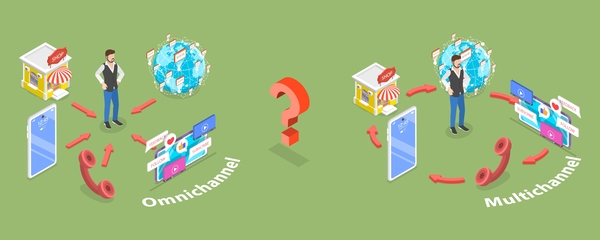
Why is it trending? Because it allows companies to adapt to changes in consumer behavior and take advantage of opportunities that arise across different channels. For example, if a company uses omnichannel marketing, it can reach consumers through various platforms (such as LinkedIn, email, SEM, programmatic advertising, etc.), enabling it to reach a wider audience and adapt to changes in consumer behavior.
Why is it important? Primarily because it allows companies to offer a consistent and coherent experience to consumers across all channels. For example, if a consumer searches for product information online but then sees an advertisement for the same product on television, it’s important that the information presented is consistent across both channels. This way, consumers can trust the information they receive and feel more confident when making a purchase decision.
Dark funnel or the “dark zone” where your customers are located
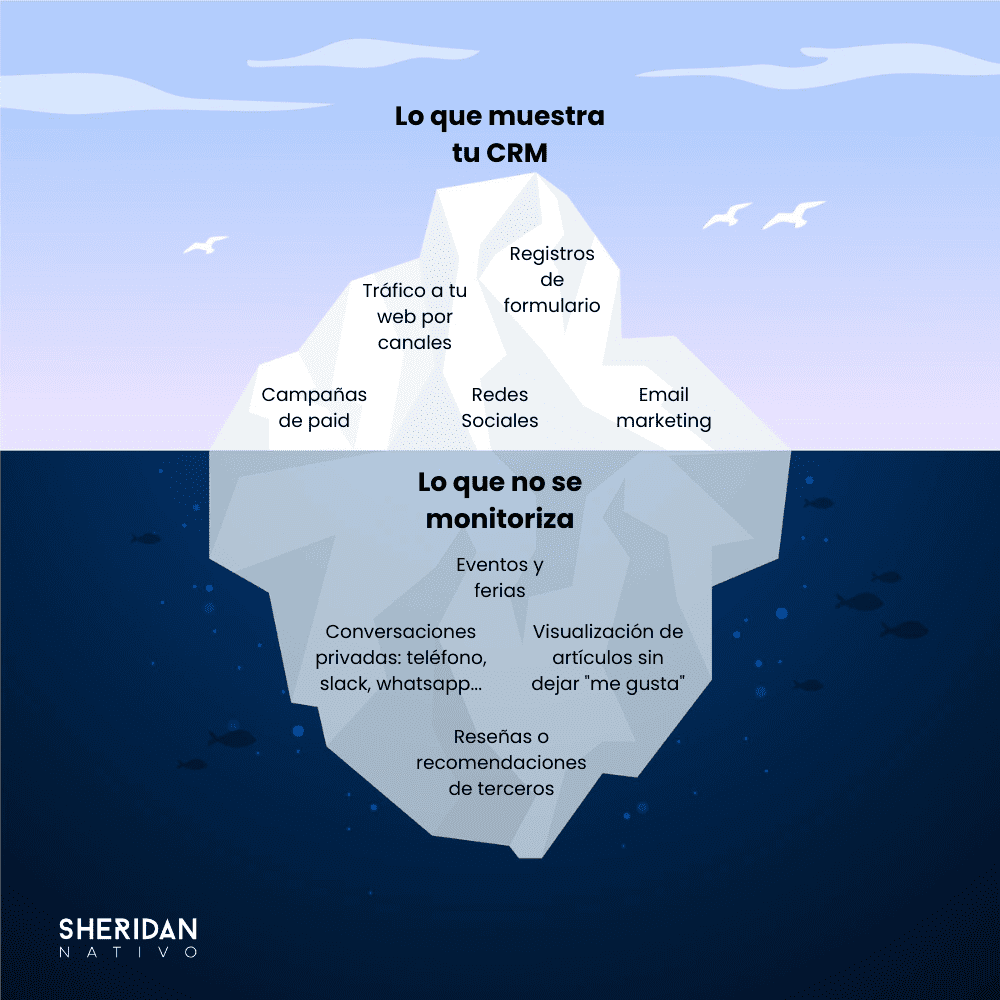
You’re probably finding it difficult to acquire B2B clients. Why is that? Because, in reality, certain behaviors can’t be monitored, such as in interpersonal relationships or business-to-business interactions. Many financial agreements are generated outside of what we consider the “business ecosystem,” such as meetings in restaurants.
The same applies to the digital environment. There are certain online behaviors that cannot be tracked. In other words, it’s the invisible buyer’s journey, where prospects become leads seemingly out of nowhere, and our CRM is unable to identify their behavior.
It’s very common for many B2B companies to have a mysterious source of “direct traffic” to specific web pages (such as blog posts). This unattributed direct traffic is a large part of the dark funnel.
Therefore, as a B2B marketing agency, we recommend that you have sufficient capacity to generate useful and valuable content to create future business relationships, even if we don’t know exactly where they may come from.
To provide some figures, below you will see some data on the most common and “dark” channels used according to Statista (2019) in the US and the UK:
- 63%: private messaging apps
- 54%: Posts on social media accounts
- 51%: word of mouth offline/in person
- 48%: SMS (mobile phone)
- 37%: email
B2B marketing trends for this year
ABM – Selling to industrial clients through target accounts
One of the techniques we use to acquire B2B clients is ABM, Account-Based Marketing. This technique allows us to acquire, retain, and grow high-value accounts. To achieve this, marketing and sales teams must work in close coordination.
It is an advanced and scalable strategy that allows you to focus on specific ICPs and can be approached in three ways:
- One-to-one (1:1), also called Strategic ABM, is a strategy that delivers personalized content and messages directly to individual target accounts, treating each account as a single market. These strategies lead to improved engagement, stronger relationships, and greater customer loyalty.
- One-to-few (1:few), also called ABM Lite: We focus on personalizing content for a small group of relevant target accounts. The same content personalization strategies are used as in one-to-one marketing, but they are scaled up to target a larger number of accounts that share similar profiles and industries.
- One-to-many (1:many), also called Programmatic ABM: leverages programmatic technology to tailor marketing campaigns to specific accounts that share common characteristics. The content delivered is personalized.
For account-based marketing to be effective, you need an omnichannel approach, sufficient content and resources, aligned marketing, sales, and customer service departments, and a thorough understanding of the verticals or segments you want to target. If you haven’t yet reached this stage, we suggest starting with an industrial inbound marketing strategy.
Inbound marketing – A strategy for creating business relationships based on authority and trust
If you’re looking for a medium- to long-term strategy, Inbound Marketing can be the solution to acquire B2B clients.
Inbound marketing is a marketing approach that focuses on attracting potential customers through relevant and valuable content, rather than interrupting people with unwanted ads. The goal of inbound marketing is to build lasting customer relationships by delivering helpful and relevant content.
→ Read more about the Inbound Marketing Funnel
Inbound marketing is based on the idea that by offering valuable content to people at the right time, you can attract potential customers more effectively. It uses tactics such as content marketing, SEO (search engine optimization), social media marketing, and email marketing to attract potential customers to your website and convert them into loyal clients.
In short, inbound marketing is a marketing approach that focuses on attracting potential customers through relevant and valuable content, rather than interrupting people with unwanted ads. It relies on delivering valuable content to people at the right time to attract leads and convert them into loyal customers.
Email marketing – Activating your databases
Two of the situations we frequently see at the agency with our clients are:
- They do not incorporate their current (customer) databases into marketing flows.
- They’ve compiled databases after industry events or trade shows, but they haven’t activated them. In other words, they aren’t communicating with those people or sending them marketing emails (like newsletters).
Email is probably the tool your prospects use most. If you have a well-defined audience, segmented and grouped by similar characteristics, your campaigns can deliver sales conversions.
Furthermore, email marketing isn’t just for generating relationships with prospects. It’s also a powerful technique for building loyalty with your current customers, enabling cross-selling and generating referrals to other businesses.
In short, we can offer you the latest innovations in marketing, technology, and consulting to successfully manage your B2B marketing campaigns. Our methodology is based on auditing and data analysis to create effective, high-converting marketing proposals.
Request your free consultation with our experts.
Frequently Asked Questions